
Ask three people what a business earns and you will get three numbers. None of them is wrong. They are simply answering different questions, and only one of them is the question a buyer is asking.
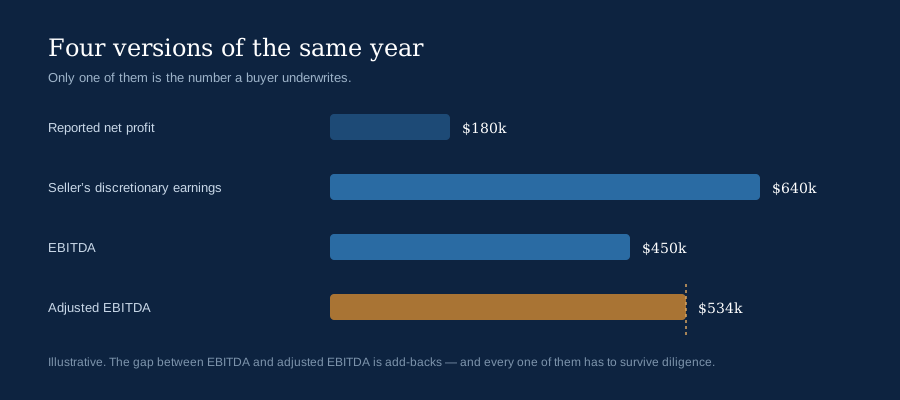
Four versions of the same year
- Reported net profit. What the tax return says. It is the lowest of the four, deliberately — most owners spend years legitimately minimising it.
- SDE — seller's discretionary earnings. Net profit plus the owner's salary, benefits, personal expenses run through the business, interest, depreciation and one-off items. This is the number used for owner-operated businesses, because the buyer will be taking the owner's seat.
- EBITDA. Earnings before interest, tax, depreciation and amortisation — after a market-rate salary for whoever does the owner's job. Used once a business is large enough to be run by management rather than by its owner.
- Adjusted EBITDA. EBITDA with non-recurring items normalised out. This is the number a deal actually gets priced from, and it is the one that gets argued over.
The add-back problem
Every add-back is a claim: this expense will not exist for the new owner. Some are obviously true — your personal vehicle, a family member on payroll who does not work in the business, legal fees from a one-off dispute. Some are obviously not — the marketing spend that generates your leads is not discretionary just because you could stop doing it.
Most sit in between, and the outcome depends entirely on whether you can document them. An add-back with an invoice, a board minute or a clear paper trail survives diligence. An add-back that rests on "trust me, that was personal" does not, and it costs you a multiple of itself. A $40,000 add-back that fails on a 4× multiple is $160,000 off the price.
Why one clean year beats three explained ones
Buyers and their lenders discount what they cannot verify quickly. A business with reviewed statements, a consistent chart of accounts and add-backs that reconcile to source documents moves through diligence in weeks. One where the earnings have to be reconstructed from memory takes months, and every extra month is another opportunity for the deal to die or the price to be retraded.
What to do about it
- Separate personal spending from the business now, not in the year you go to market.
- Keep a running add-back schedule with the supporting document attached as it happens.
- Consider reviewed statements for the two years before a sale — they usually pay for themselves.
- If a genuinely one-off item hits a year, write down why at the time. A contemporaneous note is evidence; a recollection three years later is not.
None of this changes what the business earns. It changes what a buyer will believe it earns — which is the only figure that gets paid.