
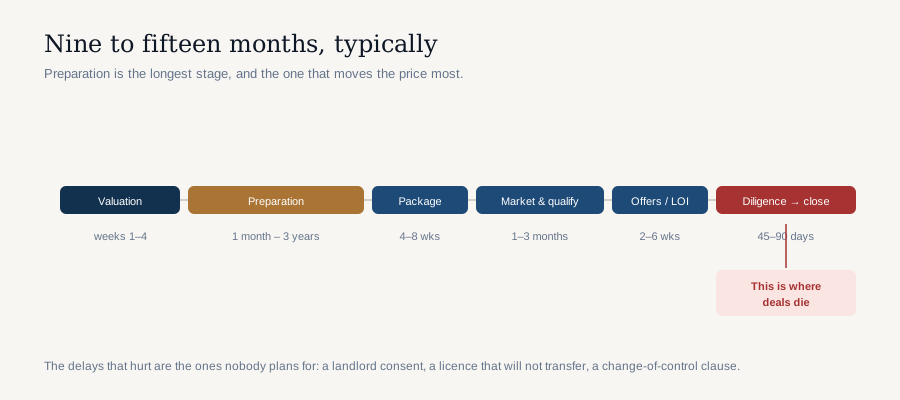
Owners tend to imagine a sale as an event. It is a process, and knowing its shape makes the difference between running it and being run by it. What follows is a realistic timeline for a lower-middle-market transaction.
Stage 1 — Valuation and honest conversation (weeks 1–4)
What is the business worth today, what is driving or limiting that, and is now actually the right time? This stage costs nothing and commits you to nothing. Plenty of good outcomes start here and then wait two years.
Stage 2 — Preparation (1 month to 3 years)
The most variable stage, and the one that moves the price most. Cleaning up reporting, reducing owner dependence, diversifying accounts, documenting process, resolving the lease, tidying the balance sheet. An owner who is genuinely ready may spend a month here. One who starts three years out captures far more.
Stage 3 — Packaging (weeks 4–8)
The blind profile that can be published, the confidential information memorandum that goes to buyers under NDA, the financial package, and the answers to the forty questions every buyer asks. Doing this properly is what lets the next stage move fast.
Stage 4 — Market and qualify (1–3 months)
Confidential outreach. Buyers sign NDAs, receive the memorandum, ask questions, and are qualified — financial capacity, financing, experience, and whether they can realistically close. On an attractive business this stage is busy: dozens of NDAs is normal, and most of those buyers will never make an offer.
Stage 5 — Offers and letter of intent (2–6 weeks)
Offers are compared on structure, not just headline price: cash at closing versus seller note versus earn-out, what the working capital target is, what the seller's post-closing role looks like, and how conditional the offer really is. The LOI locks the major business terms and starts an exclusivity period.
Stage 6 — Due diligence (45–90 days)
This is where deals die. Financial, legal, operational, environmental, employment. The buyer verifies everything asserted so far, and their lender runs a parallel process. Surprises here are far more damaging than the same facts disclosed up front — a problem disclosed early is a negotiation, the identical problem discovered late is a trust issue.
Stage 7 — Documentation and closing (3–6 weeks)
Purchase agreement, schedules, lease assignment, licence transfers, consents, escrow, payoff letters and the funds flow. Attorneys drive this stage; the terms they are documenting were set back at the LOI.
Stage 8 — Transition (30 days to a year)
Whatever the agreement says about training, introductions and the seller's continued involvement. Where an earn-out exists, this stage is still part of the price.
Where the time actually goes
Nine to fifteen months from decision to wire is normal. The delays that hurt are rarely the ones people plan for — they are a landlord who will not consent, a licence that does not transfer, a customer contract with a change-of-control clause nobody read, or a set of books that takes eleven weeks to substantiate. Every one of those is findable months in advance, and cheap to fix then.